
Kategoriler
Yeni blog
RS485 Water Quality Sodium Ion Sensor: Real-time Online Na⁺ Monitoring for Intelligent Water Treatment
April 02 , 2026In water treatment, environmental monitoring, and industrial process control, sodium ion concentration is a critical parameter. Whether in boiler feedwater, drinking water purification, or aquaculture, excessive sodium content can lead to corrosion, scaling, or degraded water quality. Traditional laboratory sampling and testing suffer from significant lag and cannot meet the demands of real-time monitoring. The emergence of the RS485 water quality sodium ion sensor makes online, continuous, and accurate sodium ion monitoring a reality.
Core Parameters and Measurement Performance
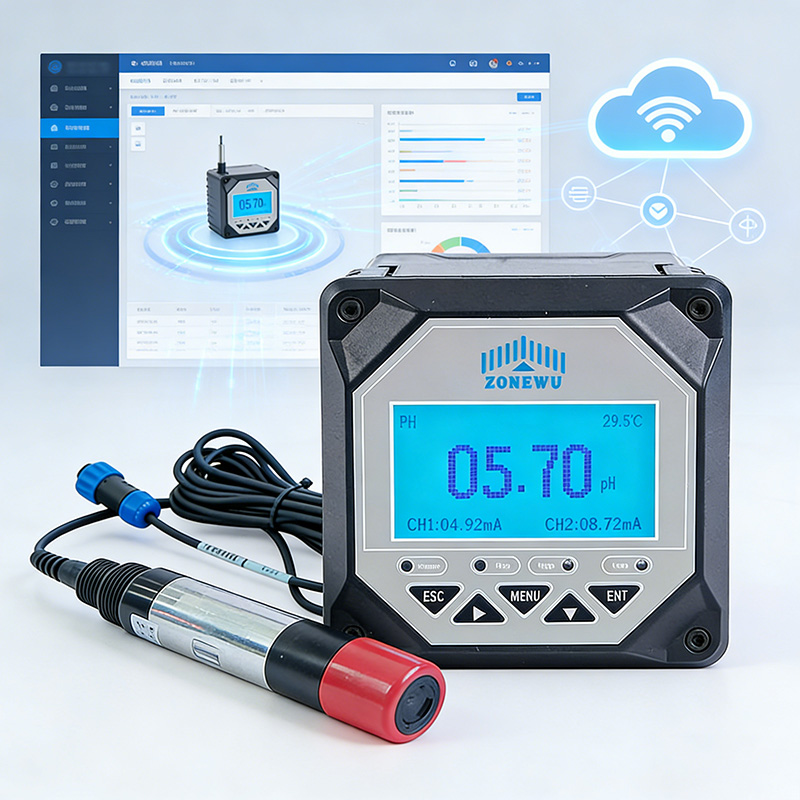
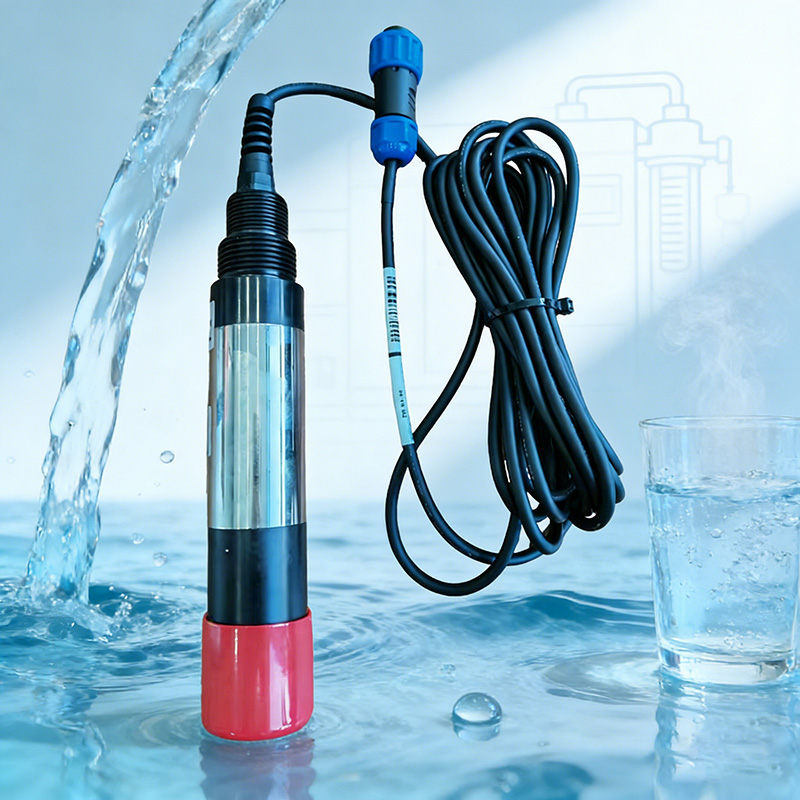
Taking the ZW-NA-PR sodium ion sensor as an example, it employs the ion-selective electrode method with a glass-sensitive membrane that specifically adsorbs sodium ions in water and generates a potential signal related to the concentration.
The sensor is factory-calibrated; users only need to activate it in deionized water for more than 6 hours before use.
RS485 + Modbus RTU: The Standard Interface for Industrial IoT
The most prominent technical highlight of this sensor is its simultaneous support for RS485 (Modbus RTU protocol) and 4–20 mA analog output. Among these, the RS485 interface offers significant advantages:
Default communication parameters: 9600 baud, 8 data bits, 1 stop bit, no parity, device address 1. Users can adjust as needed.
Calibration and Maintenance Essentials
To ensure measurement accuracy, calibration is recommended every 1–2 months using the two-point calibration method:
The calibration process can be completed via Modbus commands: first write the standard solution value, then place the electrode in the corresponding solution, and after the ADC stabilizes, send the confirmation command.
Daily maintenance precautions:
The electrode’s sensitive membrane is made of glass and is non-repairable. When cleaning, gently dab dry with soft tissue – do not wipe.
For long-term non-use, place diluted sodium ion standard solution (e.g., 10 ppm) inside the protective cap to soak the electrode. Do not store it dry.
Keep cable connectors clean and dry; avoid water ingress.
If white potassium chloride crystals appear on the electrode surface, rinse with distilled water – this does not affect performance
Typical Applications
Common Communication Troubleshooting
If there is no response via Modbus, check in sequence:
Conclusion
The RS485 water quality sodium ion sensor deeply integrates traditional ion-selective electrode technology with modern industrial communication protocols, enabling online, digital, and networked monitoring of sodium ion concentration. It not only reduces the cost of manual sampling and laboratory testing but also transforms water quality management from “passive response” to “proactive warning.” For water treatment system integrators, environmental engineering companies, and industrial automation users, this is a high-cost-performance sensor worth attention.https://www.zonewuiot.com/rs485_c15

Televizyon : +86 18146178586
Whatsapp : +86 18146178586
E -posta : qui@zonewu.com
Eklemek : 1501-3, Building F03, Phase III, Software Park, Jimei District, Xiamen City, Fujian Province, China